Knee Osteoarthritis Pain-Relief Exercises!
Table of Contents
Introduction:
A frequent condition that impairs knee mobility and causes pain and stiffness is knee osteoarthritis. In addition to slowing the advancement of osteoarthritis, regular practice of these exercises helps ease the pain and difficulty of daily tasks, including rising from a chair, walking, and climbing stairs.
Benefits of Knee Osteoarthritis Pain-Relief Exercises:
Exercises for knee osteoarthritis pain alleviation have several benefits, such as:
- Decreased Pain: Joint pain and inflammation can be lessened with mild motions and strengthening activities.
- Increased Flexibility: Mobility exercises and stretches increase the knee’s range of motion.
- Better Stability and Balance: Increased knee muscular strength improves stability and reduces the chance of falling.
- Improved Daily Function: Walking, climbing stairs, and standing are all made simpler with regular exercise.
- Reduced Osteoarthritis Progression: Preserving muscular strength and joint mobility can help prevent future knee deterioration.
- Increased General Fitness: Exercise can also help control weight and cardiovascular health, which lessens knee strain.
Best Knee Osteoarthritis Pain-Relief Exercises:
Quadriceps Sets:
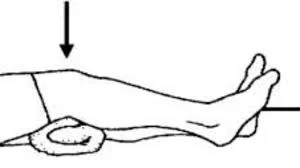
The front thigh muscles that support and stabilize the knee joint can be strengthened with easy yet efficient quadriceps workouts. Gently press the back of your knee onto the floor or bed to tighten your thigh muscles.
On each leg, perform this motion multiple times. Frequent quadriceps exercises can ease knee pain, increase joint stability, and facilitate daily tasks like standing and walking.
VMO (Vastus Medialis Oblique) Exercise:

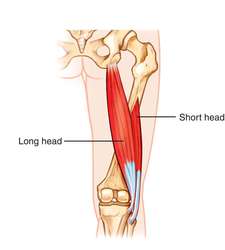
A component of the quadriceps muscle on the inside of the thigh, the Vastus Medialis Oblique (VMO) is essential for maintaining appropriate kneecap tracking and stabilizing the knee. Knee pain can be lessened by strengthening the VMO, particularly in cases of osteoarthritis or patellofemoral pain.
The terminal knee extension is a popular VMO exercise that involves sitting or lying with your leg straight, pushing the back of your knee slightly toward the floor with your inner thigh muscles, holding the position for 5–10 seconds, and then releasing it. Mini squats with the feet slightly out, which target the inner thigh muscles, are another useful technique. Frequent VMO training improves total leg function, lowers pain, and increases knee stability.
Heel Slides:
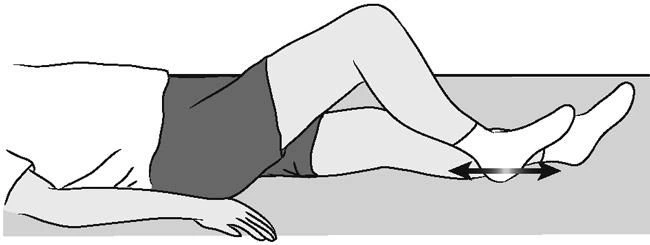
Particularly helpful for people with osteoarthritis or stiffness following surgery, heel slides are a mild exercise that increases knee range of motion and flexibility. To execute heel slides, extend your legs while lying on your back. Keeping your foot on the floor or bed, slowly bend one knee by sliding your heel toward your buttocks.
Then, slowly straighten the leg back to its initial position. On each leg, perform this motion multiple times. Frequent heel slide practice improves knee mobility, eases stiffness, and increases joint circulation, all of which serve to ease pain and facilitate movement in daily tasks.
Straight Leg Raises:
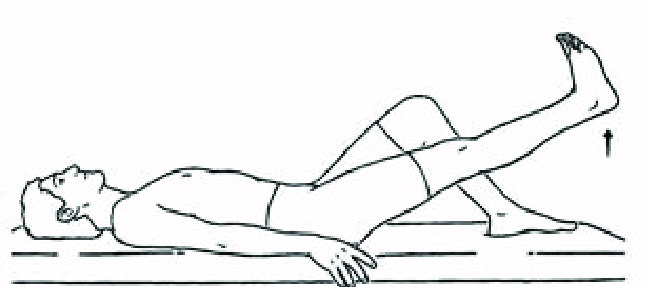
This exercise involves lying on your back with one leg straight and the other bent at the knee. Maintaining the leg fully extended, steadily raise the straight leg to the height of the bent knee by contracting its thigh muscles.
Slowly drop it back down after holding it for a few seconds. On each leg, repeat for several repetitions. Walking, climbing stairs, and standing are all much simpler with regular practice of straight leg raises, which also aid in strengthening the legs generally and improving knee stability and pain.
Seated Knee Extension:
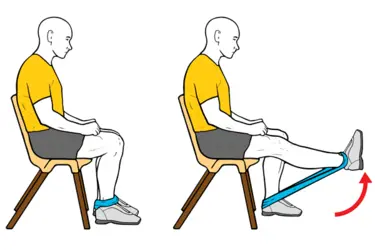
A straightforward yet powerful exercise for strengthening the quadriceps muscles, which support and stabilize the knee joint, is seated knee extensions. Sit in a chair with your feet flat on the floor and your back straight to do this exercise.
slowly raise one leg in front of you until it is completely extended, hold it there for three to five seconds, and then slowly bring it back down. On each leg, repeat for several repetitions.
Seated Hip Flexion:
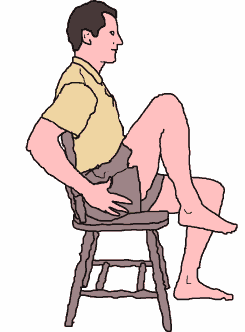
For people with knee osteoarthritis or restricted mobility, seated hip flexion is a useful exercise since it works the hip flexor muscles while reducing strain on the knee joint. Place your feet flat on the floor and sit up straight on a chair to do this exercise.
On each leg, repeat for several repetitions. Sitting hip flexion exercises relieve stiffness, strengthen the muscles surrounding the joint, increase hip and knee mobility, and facilitate easier movement during daily tasks.
Wall Sits:
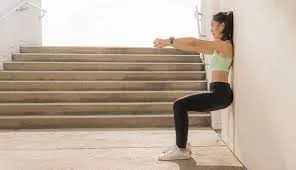
Standing with your back against a wall and your feet shoulder-width apart, approximately one foot from the wall, is how wall sits are performed. With your back flat against the wall, slowly slide down the wall until your knees are bent at a 90-degree angle or as comfortably as possible.
After holding this posture for ten to thirty seconds, carefully rise back to your feet. Repeat several times. Frequent wall sit exercise helps increase endurance for everyday tasks like walking, climbing stairs, and standing, as well as lower-body strength, pain reduction, and knee stability.
Clamshells:
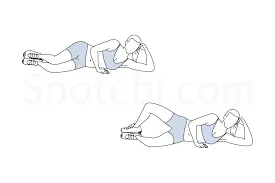
The hip abductors, glutes, and outside thigh muscles can be strengthened with clamshell exercises, which assist knee alignment and lessen joint stress. Clamshells are performed by lying on your side with your knees bent at a 45- to 90-degree angle and your legs stacked.
Lift the top knee as high as you can without turning your hips while keeping your feet together, then slowly bring it back down. On each side, repeat several times. Frequent clamshell exercises assist in preserving appropriate movement patterns throughout daily tasks, including walking, climbing stairs, and standing.
Walking:

Walking is a low-impact, weight-bearing exercise that strengthens the muscles that support the knees, enhances circulation, and maintains general joint health. Walking regularly can help manage weight, ease knee stiffness, improve cardiovascular health, and improve general function, making daily tasks less uncomfortable.
Cycling:
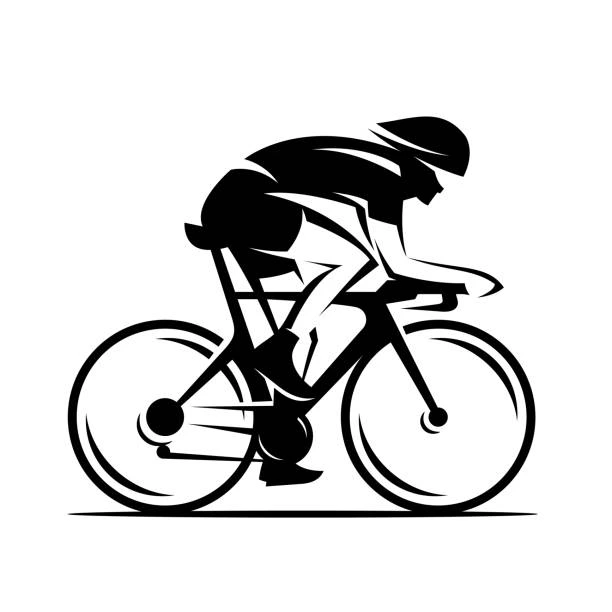
Pedaling, whether on a stationary bike or a regular bicycle, helps enhance circulation, decrease osteoarthritis-related stiffness, and improve knee mobility. To safely complete this workout, keep your pace steady and your knees slightly bent at the bottom of each pedal stroke by adjusting the seat height.
Frequent cycling can support general joint health, increase muscular strength, endurance, and lessen knee pain, making everyday activities like standing, walking, and climbing stairs more bearable.
Conclusion:
Exercises for knee osteoarthritis pain alleviation are essential for controlling pain, increasing the range of motion, and improving knee function in general. People can lessen stiffness, stabilize the knee joint, and support daily activities more easily by routinely engaging in a mix of strengthening, stretching, and low-impact exercises.
Regular practice promotes long-term joint health and a more active, independent lifestyle by reducing pain and slowing the course of osteoarthritis.
FAQs
Although osteoarthritis (OA) is not directly caused by a single deficiency, deficiencies in vitamin D and maybe selenium are linked to an elevated risk and progression of osteoarthritis in the knee. Due to their functions in joint tissue health and anti-inflammation, other nutrient deficiencies, such as those in vitamin C, vitamin E, and vitamin K, may worsen the illness or contribute to it. Changes in the joints caused by osteoarthritis have also been connected to estrogen deficiency.
Numerous dietary supplements have demonstrated potential in reducing stiffness, pain, and other symptoms associated with arthritis. Researchers have investigated several natural compounds for osteoarthritis (OA) and rheumatoid arthritis (RA), including glucosamine and chondroitin, omega-3 fatty acids, SAM-e, and curcumin.
Topical NSAIDs probably won’t be as effective as oral medications for severe pain, but they might help people with mild to moderate arthritis. They are available as over-the-counter and prescription gels and lotions. Diclofenac or Voltaren, ibuprofen, and ketoprofen gels are the most effective, according to a Cochrane review.
Increase knee lubrication by drinking enough water, keeping a healthy weight to lessen joint stress, and doing regular low-impact workouts like cycling, swimming, or walking to encourage the circulation of synovial fluid. Eat a diet high in anti-inflammatory foods like omega-3s and antioxidant-rich fruits to maintain cartilage health, and incorporate intelligent strength training to develop supportive muscles.
Patients with knee osteoarthritis benefit from knee gel injections, also known as hyaluronic acid shots, which lubricate the joint, lessen pain, and enhance function. Generally speaking, they work best for people with mild to severe arthritis who have not responded well to medicine, physical therapy, or activity adjustment.
In certain situations, knee pain can be relieved without surgery. Bracing, medicine, and lifestyle modifications can sometimes be an effective way to treat knee pain or injuries. Steroid injections or physical therapy may help people with arthritis manage their symptoms.
The best oral medications for OA are NSAIDs. These consist of diclofenac (Voltaren, among others), naproxen (Aleve), and ibuprofen (Motrin, Advil). All of them function by preventing the enzymes that produce pain and edema.
Regular, low-impact exercises that circulate fluid within the joint, such as cycling and swimming, can improve the production of synovial fluid, which lubricates your knee joints naturally. Drinking lots of water to stay hydrated is also essential because it keeps this natural lubricant’s volume and even distribution stable. Consuming antioxidant-rich fruits and vegetables, as well as omega-3 fatty acids from foods like almonds and salmon, can help maintain joint health and prevent inflammation. Additionally, keeping a healthy weight eases the strain on your knees, and a light massage can help increase blood flow to the area.
Concentrate on therapies including exercise therapy, weight management, and activity adjustment to alleviate osteoarthritis-related knee pain. Knee bracing, applying capsaicin lotion, and applying heat and cold packs are additional beneficial treatments.
References:
- Exercises for knee osteoarthritis and joint pain. (n.d.-b). WebMD. https://www.webmd.com/osteoarthritis/ss/slideshow-knee-exercises
- NHS inform. (2025, February 7). Exercises to help with osteoarthritis of the knee | NHS inform. NHS Inform. https://www.nhsinform.scot/illnesses-and-conditions/muscle-bone-and-joints/leg-and-foot-problems-and-conditions/exercises-for-osteoarthritis-of-the-knee
- Exercises for the knees. (n.d.). Arthritis UK. https://www.arthritis-uk.org/information-and-support/living-with-arthritis/health-and-wellbeing/exercising-with-arthritis/exercises-for-healthy-joints/exercises-for-the-knees/
- Lindberg, S. (2024, January 31). 10 exercises to help relieve knee pain. Healthline. https://www.healthline.com/health/exercises-for-knee-pain
- Higuera, V. (2025, June 16). 10 types of exercise to try with arthritis of the knee. https://www.medicalnewstoday.com/articles/311138