Scissor Kicks Exercise
Scissor Kicks is a core-strengthening exercise that targets the lower abdominal muscles, hip flexors, and legs. It helps improve core stability, coordination, and endurance while also enhancing lower-body control.
Table of Contents
What is Scissor Kick Exercise?
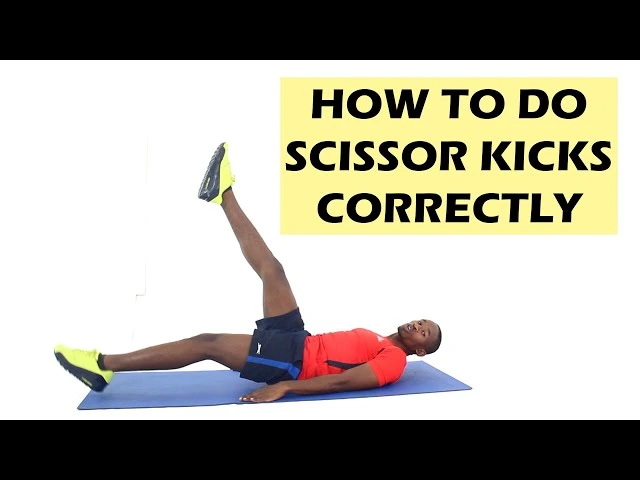
Scissor kicks are bodyweight ab exercises that target your leg and core muscles. Lying face up on an exercise mat, raise your legs until your upper and lower bodies are at a 45-degree angle to perform scissor kicks.
Cross your feet back and forth in the air in an alternate motion while maintaining an active core and your lower back on the mat. Scissor kicks can improve hip flexor muscle mobility, strengthen your core, and add cardio exercise to your strength-training program when done correctly.
Muscles Used While Performing Scissor Kicks
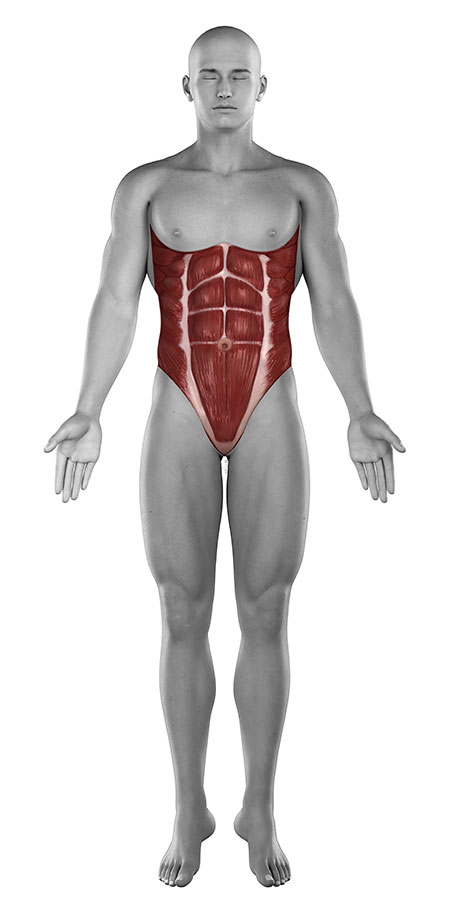
Scissor kicks are surprisingly difficult because they work a lot of your leg and core muscles. The following are the main muscles used in this exercise:
- Transverse Abdominis
- Hip Flexors
- Rectus Abdominis
- Lower Abs
- Adductors
- Abductors
Scissor Kicks Exercise Video
How To Perform Scissor Kicks?
With scissor kicks, start with two to three sets of ten to twenty reps. Choose your sets and repetitions according to how well you can perform each set and repetition.
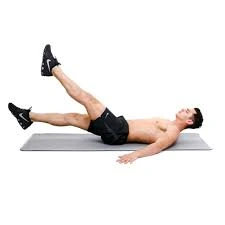
- To begin, lie on an exercise mat face up. Put your hands beneath your glutes or place your arms by your sides with your palms facing down. Throughout the exercise, keep your chin tucked, as though you were grasping an egg beneath your chin. Your pelvis should be slightly tucked in, and your ribs should be lowered. Activate your core.
- Point your toes away from your torso while raising your legs three to five inches off the ground. This beginning position should be used for every repetition.
- Cross your right foot over your left while keeping your alignment, then quickly cross your left foot over your right.
- Until you reach the necessary number of repetitions, keep moving your legs in a slow, alternating manner.
Variation in Performing Scissor Kicks
Lessen the Intensity While Performing Scissors Kicks
- Don’t raise your legs above the mat. This may relieve some of the strain on your lower back. Start this exercise with your feet barely touching the floor if you feel your lower back arching up away from the mat. Increase the space between your legs and the floor as you gain strength. Ensure that your back is not arched.
- The scissor kick can be replaced with a bicycle crunch. The scissor kick and the bicycle crunch have comparable motion patterns.
- Before attempting the scissor kick exercise, think about perfecting a supine bicycle crunch exercise to increase strength and endurance.
Increase the Intensity While Performing Scissor Kicks:
- Increase the extent of the scissoring motion and raise your legs higher.
- Before swapping legs, slow down the kicking motion and hold the upper leg for two to three seconds.
- Light ankle weights should be added.
Benefits of Performing Scissor Kicks
- Increase Core Strength
- Decrease Lower Back Pain
- Tone Abs
- Help With Everyday Tasks
- Increase Performance
- Fix Imbalances
Increase Core Strength:
Scissor kicks are a great way to strengthen your core muscles for both daily movement and sports performance. Running, jumping, deadlifts, squats, and other exercises will all be immediately impacted by strengthening these muscles together.
Decrease Lower Back Pain:
It’s awful to wake up from a chair with a stiff lower back. The scissor kick exercise will strengthen all of the core muscles that are essential for maintaining spinal stability and pain-free movement. Your lower back and the front of your hips will feel less tight and more comfortable if you strengthen your hip flexors, which are important.
Tone Abs:
All of your other activities will be more powerful when your core is stronger. Your core will be strengthened and toned with scissor kicks, but as you get better at the other exercises, the area will continue to tone. Priority one should be to strengthen your abs to preserve your spine. If your diet is in order, once your abs are strong enough to do that, they will reward you with amazing beach body abs.
Help With Daily Tasks:
Walking and getting out of a chair are examples of daily tasks that benefit from strengthening the appropriate muscles. If you’ve ever experienced pain while walking or standing up, you know that it shouldn’t be taken for granted. However, these may be overlooked when our training is focused on difficult, advanced activities.
Increase Performance:
Strengthening your core will directly benefit your daily activities, including running, jumping, and throwing. Every athlete is aware of the impact a strong core has on their performance. Keep in mind that this is only one essential piece, yet it fulfills a lot of requirements.
Fix Imbalances:
This exercise is special because it can strengthen the core muscles collectively. This exercise is technically unilateral because you are alternating one leg at a time while moving in tandem, and it requires the ability to recruit several muscle groups. After a few weeks of the scissors exercise, any imbalance in your core muscles will begin to balance out.
Precautions
- An intermediate-level workout that calls for lower-body and core strength is the scissor kick. Think about changing the exercise if you have neck problems, tight hip flexors, or low back problems.
- Additionally, think about consulting a personal trainer or physical therapist if you’re new to exercising and unsure of how to activate your abdominal muscles.
- Try a different workout to strengthen your core muscles if you are pregnant. According to the American College of Obstetricians and Gynecologists, it might not be the best idea to exercise while lying flat on the ground after the first trimester.
Summary
Scissor Kicks is an effective exercise to strengthen your core, tone your lower abs, and improve hip stability. Including it regularly in your workout routine helps build endurance and supports better posture and overall core control.
- It’s difficult to have the strength to do a scissor kick. Because of this, it’s crucial to take your time and follow the movement’s natural progression.
- Try one of the variations if the standard scissor kick exercise is too difficult. More important than the quantity of repetitions is maintaining precise form and using the right muscles.
FAQ’s
Scissor kicks benefit the body by strengthening the core, improving posture and balance, and building endurance. They work a variety of muscles, including the abs, obliques, hip flexors, glutes, and quads, while also promoting overall stability and protecting the spine from injury.
Kick your legs up and down in a scissor motion while lying on your back. This exercise improves fat burning and develops your lower abdominal muscles.
Your thighs and gluteal (buttock) muscles will be toned and worked by scissor kicks, which will result in smaller thighs. On the mat, lie flat. To support your head, place your palms behind your head. Carefully raise your legs while maintaining perfect alignment.
References:
- Lindberg, S. (2019, May 1). How to do scissor kicks. Healthline. https://www.healthline.com/health/scissor-kicks
- Scissor kick – Exercise guide & Proper form | GymStreak. (n.d.). https://www.gymstreak.com/exercises/scissor-kick
- Yovino, K., & Yovino, K. (2023, August 25). Scissor Kicks: Correct form, Benefits, & Muscles worked. SET FOR SET. https://www.setforset.com/blogs/news/scissor-kicks?srsltid=AfmBOooYepHkgwQnSzNusbPKnxE84vpE52ji_aze3PuD9SgdhwFETdRA

2 Comments