Top Exercises to Strengthen Your Back and Core Muscles
Table of Contents
Introduction:
A healthy, pain-free body starts with a strong back and core. In addition to supporting your spine, these muscles help with balance, posture, and injury prevention during regular activities and exercise.
Strengthening your back and core improves overall stability and movement effectiveness in addition to reducing back pain. You can improve your functional strength for daily life, increase flexibility, and develop endurance by including focused exercises in your program.
Benefits of Strengthening Your Back Core Muscles:
- Improves Posture: Having a strong back and core helps keep your spine in the right alignment, which keeps you from slouching and encourages perfect posture.
- Reduces Back Pain: By strengthening these muscles, you can better support your lower back, reducing pain and strain.
- Improves Stability and Balance: Core strength increases stability and coordination, making daily activities and workouts safer and more effective.
- Improves Athletic Performance: A strong back and core improve power, agility, and endurance for sports and physical activities.
- Prevents Injuries: Your body is shielded from overuse and strain injuries by strong supporting muscles surrounding your spine and abdomen.
- Improves Functional Strength: A strong and stable core makes daily tasks like lifting, bending, and twisting safer and easier.
Exercises to Strengthen Your Back Core Muscles:
Bird Dog:
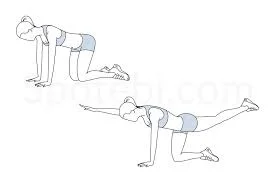
The bird dog exercise is a great way to improve balance and coordination while strengthening the back and core muscles. It simultaneously works the glutes, abdominals, and lower back.
Maintaining a tight core and level hips, extend your left leg backward and your right arm forward. This deliberate movement improves posture, strengthens the muscles supporting your back, and helps stabilize your spine.
Bridging:

Your lower back, glutes, and core muscles can all be strengthened with the bridging exercise. It enhances hip flexibility, posture, and spinal stability. To do it, lie on your back with your feet flat on the floor, hip-width apart, and your knees bent. Lift your hips slowly toward the sky while using your core to create a straight line from your shoulders to your knees.
After a few seconds of holding, carefully lower your hips once more. Frequent bridging practice improves movement in daily activities, lessens lower back pain, and strengthens the core.
Plank:

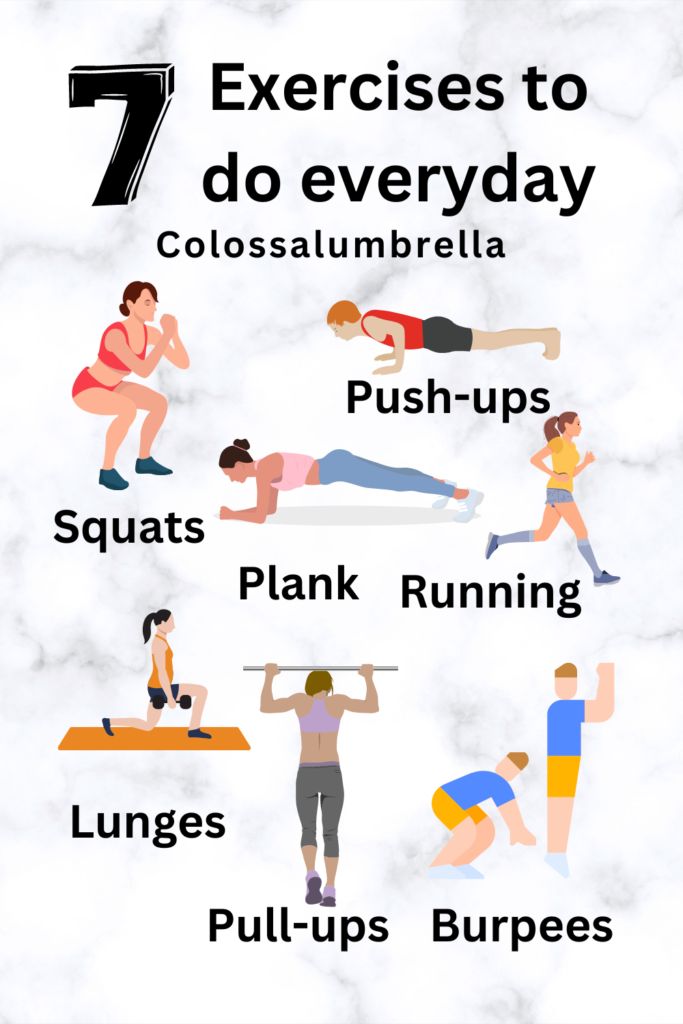
One of the best exercises for strengthening and stabilizing the core is the plank. Your entire midsection—abs, back, shoulders, and glutes—is worked. Lying face down, begin by lifting your body onto your forearms and toes while maintaining a straight body from head to heels.
Avoid letting your hips drop or lift too high by using your core. As long as you can, hold the pose with correct form. Frequent planking strengthens the spine, improves posture, and increases balance and core endurance.
Superman Exercise:
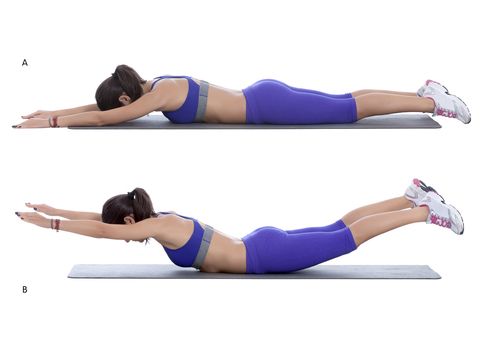
The Superman exercise is a great way to improve posture and spinal stability while strengthening the lower back, glutes, and core muscles. To accomplish it, lie face down on the floor with your legs completely extended and your arms straight in front of you.
Lift your arms, chest, and legs off the ground all at once by using your core, giving the impression that you are flying like Superman. After a few seconds of holding the position, gradually descend again. This exercise lowers the risk of lower back pain, supports a healthy spine, and strengthens the back extensors.
Flutter Kicks:
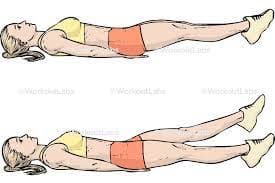
A dynamic core workout, flutter kicks work the lower back, hip flexors, and lower abdominal muscles. To execute them, lie flat on your back with your hands supporting your hips and your legs outstretched. Keeping your lower back pressed into the floor and your core tight, raise your legs slightly off the ground and alternate short, fast up-and-down kicks.
Throughout, keep your breathing under control and your movement constant. Flutter kicks improve general core stability and control, increase endurance, and strengthen the deep core muscles.
Dead Bug Exercise:

The dead bug exercise is a great way to protect the lower back and improve the deep core muscles. It enhances control, stability, and coordination. To do it, lie on your back with your legs bent at a 90-degree angle and your arms outstretched toward the ceiling. Without arching your back, steadily lower your left leg and right arm toward the floor while using your core.
Repeat on the other side after returning to the starting position. By stabilizing the spine and engaging the abdominals, this deliberate, alternating motion improves posture and strengthens the core.
Russian Twists:
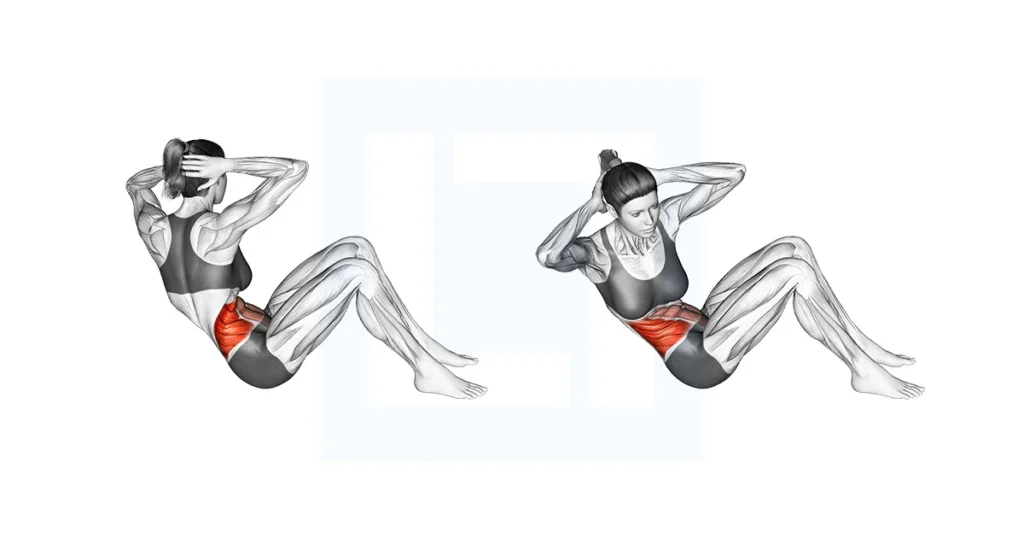
The Russian twist is a great workout to improve rotational core stability and strengthen the oblique muscles. Maintaining a straight spine and an active core, lean back a little. Holding a weight in front of your chest or your hands together, rotate your body to one side, placing your hands next to your hip, and then twist to the opposite side. Keep deliberately switching sides. This exercise improves balance, increases general core strength, and helps tone the waist.
Side Plank:

The side plank is an effective exercise that works the shoulders, hips, lower back, and oblique muscles. It enhances spinal stability and strengthens the lateral core. To do it, lie on your side with one forearm directly under your shoulder and your legs straight.
To create a straight line from your head to your feet, contract your core and raise your hips off the floor. Maintaining a tight core and lifted hips, hold the position for a few seconds before switching sides. Frequent side plank practice improves posture, balance, and general core strength.
Cobra Pose:

In yoga, the cobra pose, also called Bhujangasana, is a mild backbend that expands the chest and strengthens the spine. To execute it, lie face down with your palms beneath your shoulders and your legs outstretched. Breathe in while using your hands to raise your chest off the ground, while maintaining your shoulders relaxed and your elbows close to your body.
After a few breaths of holding the pose, let the breath and gently descend again. By stretching the muscles in the chest and abdomen, the cobra pose relieves lower back tightness, increases spinal flexibility, and improves posture.
Conclusion:
Maintaining a healthy spine, improving total body stability, and improving posture all depend on strengthening your back and core muscles. Exercises like bird dog, bridge, plank, superman, and cobra position help avoid back pain and injuries while also increasing strength.
Every action you take, from everyday chores to strenuous exercise, is supported by a strong core. You may improve your flexibility, balance, and long-term back health by including these exercises in your routine.
FAQs:
Indeed, by enhancing spinal stability, supporting the spine, and assisting with better posture, strengthening your core helps alleviate back pain. In addition to helping relieve chronic low back pain, a strong core lowers the chances of bad posture and muscle injuries that can cause back pain.
Because doing strenuous ab workouts first thing in the morning may increase your risk of back pain, think about delaying your ab workout until the afternoon or early evening. Additionally, exercising in the afternoon rather than straight before bed will help you preserve your body’s proper circadian cycle.
Exercises that work the different core muscles include planks, crunches, and bridges. A person’s mobility, stability of the spine and trunk, and support for daily activities can all be enhanced by exercising these muscles.
Poor posture, lower back pain, and trouble balancing are signs of a weak core. Additional symptoms include breathing problems, needing to use arms to stand up, and general weakness or exhaustion. Additionally, you can have a bulging stomach or digestive problems.
The front lever, open plank, and hanging leg lifts to front lever are some of the most challenging core exercises since they need advanced strength and control. Hip touches, seated leg lifts, V-ups, and side planks with rotations are other difficult exercises that significantly tax different core muscles.
All three types—aerobic, muscle-strengthening, and balancing—are crucial, according to research. Exercise variety lowers boredom and injury risk, and doing one kind can help you get better at the others.
Deadlifts and pull-ups are the two most widely mentioned workouts for developing general back strength and muscle; however, the “king” of back exercises is frequently contested. While pull-ups are a better bodyweight exercise for building back width, particularly for the lats, deadlifts are acclaimed for working the entire posterior chain, including the lower back, and can be severely loaded for maximal strength.
To ensure that your muscles heal properly, you should work out your core two or three times a week. As long as there is no severe muscular exhaustion, functional or low-intensity core exercises can be performed every day. This frequency prevents overtraining and is adequate for building muscle, particularly if you already include complex workouts in your regimen.
Walking does, in fact, build your core since each stride works your back and abdominal muscles. Over time, strength and endurance are developed as a result of the core muscles’ capacity to govern your body’s movements, maintain an upright posture, and provide stability.
With regular, mild training, you can begin to notice increases in your core strength in as little as two to four weeks. When training two to three times a week, significant strength gains usually become apparent in 4 to 8 weeks.
Over time, conditions that impact muscular strength, nerve function, or general mobility may contribute to core weakness. Respiratory Problems: Since your diaphragm is essential for maintaining core stability, breathing pattern problems might impact the coordination of your core muscles.
It depends on how hard you work out, but you may work your core every day, especially with lighter routines. Daily core exercises are feasible, but like any other muscle group, a more strenuous regimen requires rest days for recuperation and rebuilding.
Your spine may not be receiving enough support from your core if you frequently have lower back pain. The lower back must compensate for weak abdominal muscles, which causes pain and tension. Try holding a plank for 30 seconds as a quick test. A weak core may be the cause of any lower back pain you experience.
To enhance stability, posture, and balance, core workouts involve strengthening the muscles surrounding the abdomen, back, hips, and pelvis. Planks, crunches, bird dogs, and glute bridges are some exercises that target various core regions for all-encompassing strengthening. Regular core exercises can enhance general functional fitness, ease daily motions, and lessen back pain.
Planks, bird dogs, and glute bridges are workouts that strengthen the back and core. Leg rises, superman exercises, and dead bugs are additional useful possibilities. Deadlifts, squats, and Russian twists are examples of more difficult exercises.
References:
- Exercises to improve your core strength. (n.d.-b). Mayo Clinic. https://www.mayoclinic.org/healthy-lifestyle/fitness/in-depth/core-strength/art-20546851
- Turetsky, L. (2023, November 1). 6 Exercises to strengthen lower back and core muscles. PostureFlow (Formerly Back Intelligence). https://backintelligence.com/exercises-to-strengthen-lower-back/
- Davis, N. (2024, April 10). No more backaches: 18 exercises for a stronger back. Healthline. https://www.healthline.com/health/fitness/back-strengthening-muscles-posture
- Harvard Health. (2021, April 1). The best core exercises for older adults. https://www.health.harvard.edu/staying-healthy/the-best-core-exercises-for-older-adults
- Nunez, K. (2024b, April 24). The best core exercises for all fitness levels. Healthline. https://www.healthline.com/health/best-core-exercises
- Cadman, B. (2025, April 14). How to strengthen the lower back. https://www.medicalnewstoday.com/articles/323204