Stooped Posture
Table of Contents
Introduction
Stooped posture is a forward-bent position of the spine, commonly seen in older adults or individuals with conditions like Parkinson’s disease or osteoporosis. It results in a rounded back and forward head alignment, affecting balance, mobility, and overall posture.
Over time, people can develop a variety of postures, but the stooping posture is one of the most popular. When the head and shoulders drop forward and the spine is bent, this is known as a stooped posture.
This position might make it difficult to breathe properly and cause neck and back pain. To determine the appropriate course of action, it is critical to identify the various causes of stooped posture.
What Is Stooped Posture?
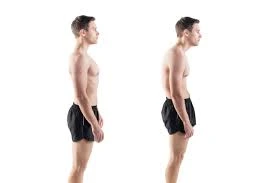
- An excessive curvature of the middle and upper spine (upper back) and forward droop of the head and shoulders are signs of a stooped posture.
- The shoulder blades may separate, and the chest muscles may tighten if the shoulders are rounded (part of this pattern).
Causes For Stooped Posture
Effective treatment and prevention of stooped posture depend on an understanding of its underlying causes. This variation in posture can be caused by several factors:
- Age-Related Changes
- Modern Lifestyle Factors
- Medical Conditions
Age-Related Changes
Bone loss causes vertebrae to become more brittle and susceptible to compression.
Muscle weakness: The back muscles become less resilient and weaker.
Disc degeneration: Spinal discs decrease their height and cushioning due to disc degeneration.
Ligament alterations: Connective tissues lose their suppleness.
Modern Lifestyle Factors
Several of your postural habits are also influenced by your everyday routines:
- Extended periods of desk work and sitting
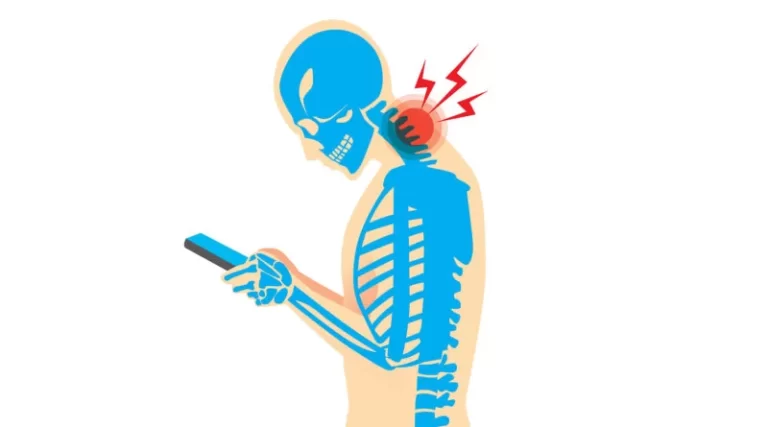
- “Text neck,” which results from using a smartphone, causes the head to tilt forward;
- Poor ergonomics: Your desk may not be correctly arranged.
- A sedentary lifestyle involves little exercise or physical activity.
Medical Conditions
The following medical conditions may also hasten the development of your hunched posture:
- Injury: A vertebral fracture may result in the loss of the spine’s curvature.
- weaker bones that are more likely to fracture due to osteoporosis.
- Scheuermann’s kyphosis is a disorder of the developing spine.
- Arthritis: tight joints and inflammation;
- Parkinson’s Disease: sluggish forward motion and stiff muscles from a disease state.
- Muscle diseases include conditions like polymyositis and muscular dystrophy.
- Congenital kyphosis: Kyphosis may result from improper spinal bone formation before birth.
Symptoms of Stooped Posture
Symptoms of a stooped posture include:
- rounded shoulders that move ahead
- Positioning the head forward such that the ears are positioned before the shoulders
- Thoracic kyphosis is an overly bent upper back.
- The chest seems to be sunken or collapsed.
- Back and shoulder pain and stiffness
- Shoulder blade protrusion
- A noticeable “hump” in the upper back
- Tight hamstrings are the muscles that run along the back of your thighs.
Diagnosis
Accurate diagnosis contributes to the availability of suitable treatment options:
Physical examination includes examining the posture of the neck and spine, walking, range of motion, weakness, numbness, abnormalities, and areas of pain.
Investigations include X-rays, MRIs, bone density tests, nerve testing, and, if lung volumes need to be evaluated, pulmonary function tests.
Treatment for Stooped Posture
Half the fight is being aware of the dangers associated with improper posture. Improved mindfulness is needed to either break this unhealthy behavior or stop it from developing in the first place. These are some crucial steps that you should take to keep your posture looking younger.
- Regularly work out: Maintaining musculoskeletal health enhances bone and muscle function. Tai chi and yoga are excellent mind-body practices for enhancing stability and balance.
- Consume a well-balanced diet with little to no red meat and mostly fruits and vegetables.
- As they are known to increase bone density, make sure people are getting adequate calcium and vitamin D.
- Reduce alcohol intake and give up smoking (for reasons other than posture).
- To develop body awareness, use the intelligent posture trainer. When someone slouches, the Upright Go 2 senses it and resonates gently to tell you to correct your posture.
Physiotherapy Exercise For Stooped Posture
- Stretching
- Strengthening
- Exercise
Strengthening
The opposing back muscles are unable to maintain a straight back and often become overstretched as a result of the anterior body muscles being less flexible. Weakness arises through this. People will be able to stay upright for longer if their back muscles are stronger.
Stretching
The flexibility of the muscles on the anterior side of the body, especially those in the neck, shoulders, and chest, is diminished by the forward-flexed posture associated with Parkinson’s disease. The forward flexed posture can be corrected using stretches that concentrate on opening the chest, neck, and upper back.
- Cat-Cow Stretch
- Cobra Stretch
- Child’s Pose
- Neck Stretch
- Shoulder Stretch
- Spinal Twist
The Cat-Cow Stretch
You do this stretch while on all fours. Your back should be arched like a cat, then rounded like a cow. Do this ten times.
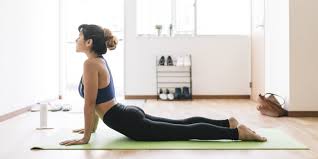
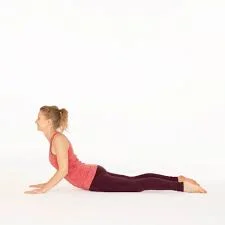
The Cobra Stretch
- With your feet together and your palms flat on the ground beside your shoulders, lie on your stomach.
- With your lower back (via your abdomen) pressed firmly into the floor, slowly raise your head, chest, and shoulders off the ground.
- After holding for five to ten seconds, slowly descend once more.
- Do this ten times.
The Child’s Pose
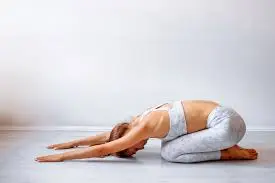
- Place your buttocks on your heels and kneel on the ground with your feet together.
- Lean forward slowly, resting your forehead on the ground in front of you.
- Then extend your arms so that your hands are flat on the ground in front of you.
- After five to ten seconds of holding, carefully sit back up.
- Do this ten times.
The Neck Stretch
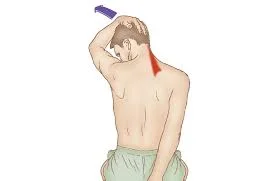
- With your chin level and your shoulders relaxed, take a tall seat or stand.
- Your head should be gently tilted forward, then left and right.
- Go back to the beginning.
- Do this ten times.
The Shoulder Stretch
- With your chin level and your shoulders relaxed, take a tall seat or stand.
- Grab the opposing arm’s elbow by extending one arm across your body.
- Pull the elbow gently across your body until your shoulder begins to extend.
- Hold for five to ten seconds, then let go and do it again on the opposite side.
- Do this ten times.

The Spinal Twist
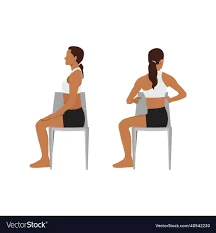
- With your chin level and your shoulders relaxed, take a tall seat or stand.
- Place one hand on the shoulder across from you by reaching over your head.
- Twist your body gently to the side until your back starts to stretch.
- Hold for five to ten seconds, then let go and do it again on the opposite side.
- Do this ten times.
An exercise in posture correction
Do not worry if people are already exhibiting symptoms of a hunched posture! Stretching activities that increase flexibility and strengthen muscles are a simple way to fix this. Keep in mind that having a strong core and back will help you stay erect for longer. The following stretches target the expansion of the neck, upper back, and chest:
- Chin Tucks
- Scapular Retractions
- Thoracic Extensions
- Stand tall
- Sit correctly
- Move around
- Wall slide
- Shoulder blade squeeze
- Bridge
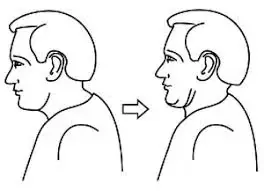
Chin Tucks
- Reducing forward head position is the aim of a chin tuck.
- Sit up straight to do the chin tuck. Lift your head until your shoulders and ears line up. Bring the chin closer to the chest.
- People will know they are doing it correctly if this produces a “double chin” effect. Repeat ten to twenty times every day.
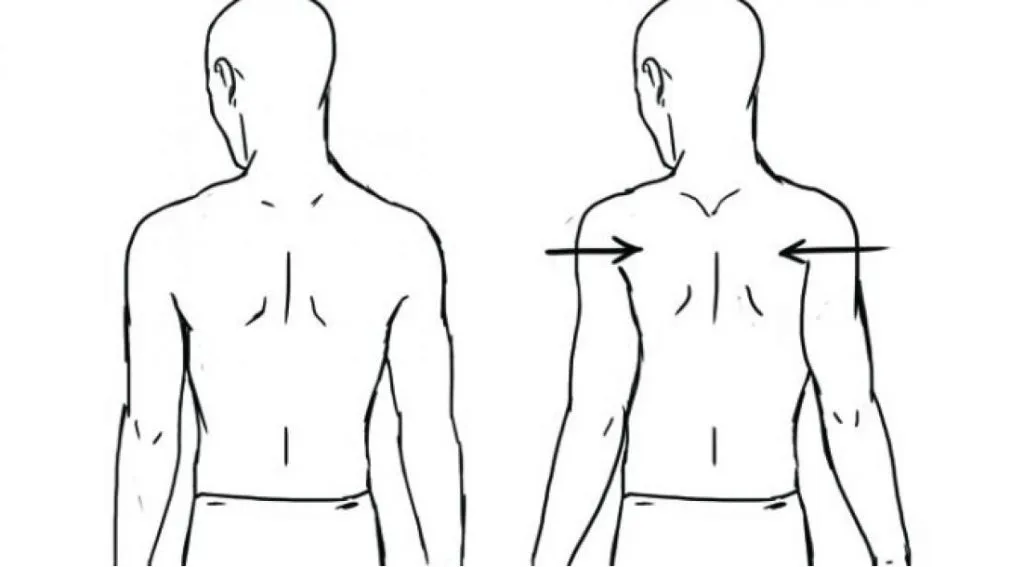
Scapular Retractions
- The reduction of shoulder rounding is the aim of scapular retraction. To do scapular retraction, sit up straight once again.
- As if you were rowing backward, bend your elbows 90 degrees and draw them back behind your body.
- Squeeze the shoulder blades together as the arms retract, being careful to keep the shoulders low and away from the ears. Perform 10–20 repetitions each day.
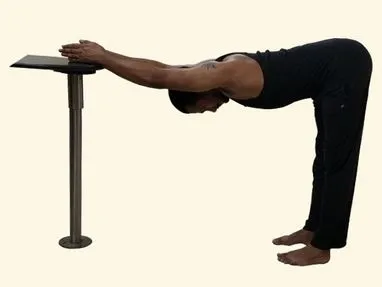
Thoracic Extensions
- Reducing “raised kyphosis,” or upper back rounding, is the aim of thoracic extension. To carry out this task.
- Take a chair with a low back. Put your hands behind your head and extend your elbows as far back as you can.
- With your head tilted toward the ceiling, lean back and up over the chair. Inhale deeply, then release it. Do five to ten reps every day.
Stand tall
Although people may not give their posture much thought, it can have a significant impact. Keep these pointers in mind to stand with proper posture:
- With your shoulders relaxed and slightly drawn back, take a tall, straight stance. Visualize the head being gently drawn toward the ceiling by an unseen string.
- Place your feet about shoulder-width apart and place most of your weight on the balls of your feet.
- Keep the knees slightly bent.
- In the stomach, tuck.
- Keep your ears above your shoulders and your head level, not bent forward.
- If someone must stand still for an extended period of time, shift their weight from their toes to their heels or from one foot to the other.
Sit correctly
Keep these pointers in mind when seated to make sure others are adopting proper posture:
- With your shoulders relaxed but not slumped or rounded, sit up straight.
- Select a chair height that enables people to maintain a firm grasp on the ground. Do not cross your legs.
- Keep your knees at hip level or just a little bit higher.
- To ensure that your spine is supported by the chair back, recline.
- Observe how your head is positioned. Keep your head and chin from resting on your shoulders.
- Keep your ears positioned above your shoulders.
- To avoid bending the neck forward or backward, keep the computer screen at eye level.
Move around
- Long periods of time spent in one position—either sitting or standing—can cause tension, pain, and fatigue in the muscles. If people are slouching, the impacts could be far more severe.
- Make it a point to get up, stretch, and move around for a few minutes every hour to avoid fatigue and muscle pain. To remind individuals to get up and move, set an alarm on your phone.
- If people can perform a different task that requires them to engage different muscles than those they use when sitting or standing, that could also be beneficial.
Wall slide
The wall slide is an effective device for resetting the body and reminding people of what proper erect posture feels like if they have been sitting in one position for a long time. Additionally, it may assist in relieving shoulder and neck strain. Performing a wall slide:
- Press your head, shoulders, butt, and back firmly against a wall. To help in proper body alignment, individuals can place their feet one or two feet apart from the wall.
- Keep the pelvis tilted to prevent the back from arching. Keep your knees bent slightly.
- With the backs of your hands against the wall, extend your arms straight above your head. This is the initial position. It’s okay if you initially struggle to extend your arms. Keep the body pressed against the wall and raise it as high as you can.
- Squeeze the mid-back muscles as people drop their arms down toward their shoulders while maintaining a tall back and an open chest. Throughout the exercise, keep the head, butt, elbows, shoulders, backs of the hands, and spine firmly against the wall.
- Lower the arms till they are just a little bit below shoulder height.
- After a few moments of holding this posture, push the arms back up to the beginning position without lifting anything off the wall.
- Do it ten or twelve times.
Shoulder blade squeeze
By strengthening the shoulder and upper back muscles, this exercise can help with posture. Additionally, it can help increase the flexibility of the chest muscles. To complete this task:
- Stand tall with your arms by your sides.
- As if attempting to bring the shoulder blades into contact, pull the shoulders gently down and back. Don’t overextend; instead, pull until you feel a slight strain in your muscles.
- Return to the starting position after a few seconds of maintaining.
- Ten times over, repeat.
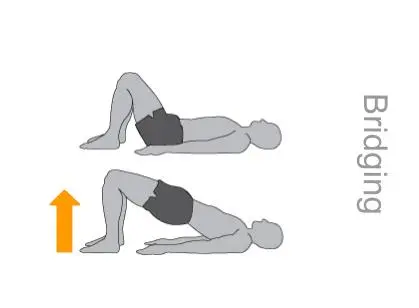
Bridge
Another excellent exercise to strengthen the core is the bridge. To perform this position:
- With your knees bent, feet flat on the ground, arms slightly out to the side, and palms on the floor, lie on your back.
- Lift your hips off the ground so that your knees are in line with your shoulders while tightening your glutes and core muscles.
- Lower the hips after 30 seconds of maintaining.
- Repeat five to eight times.
How To Prevent Stooped Posture
- In fact, with good posture habits, you may avoid a stooped posture in many situations. It’s crucial to learn proper sitting and standing techniques and to take frequent breaks to stretch and move about.
- Maintaining proper, upright posture requires strong core muscles. Because of this, having strong core muscles is essential to avoiding bad posture habits.
- The area of the body we refer to as the “core” includes the muscles in your abdomen as well as those surrounding your pelvis and lower back. Physical activities that include core workouts can therefore have a beneficial effect on both general postural wellness and stooped posture.
- It’s also crucial to utilize a backpack or briefcase that distributes weight uniformly across the body and to wear supportive, comfortable shoes.
Summary
Whether stooped or not, bad posture can cause a number of health issues. The good news is that most cases of bad posture can be fixed with therapy. See a doctor or other qualified healthcare provider if you are worried about your posture so that you can receive the right diagnosis and care.
Additionally, there are a few things you may do on your own to maintain and enhance proper posture. You can contribute to maintaining a pain-free and healthy body with a little effort.
FAQ’s
A habitual hunched-over or bent-over position with an overly forward-curved upper back is known as a stooped posture. Age, physical problems like Parkinson’s disease or kyphosis, and lifestyle factors like prolonged sitting can all contribute to this, which may cause rounded shoulders and a forward head position.
Kyphosis.
Because Parkinson’s disease (PD) impairs the brain’s ability to manage automatic functions, postural changes may happen without the brain’s normal signals to stand upright.
References:
- Barbousas, N. (2025, July 24). Stooped posture: causes & treatment. Posture Geek. https://posturegeek.com/blog/stooped-posture/
- Frenkel, M. (2025, May 29). Stooped Posture: Causes, Treatment & Prevention Guide 2025. UPRIGHT Posture Training Device. https://www.uprightpose.com/blog/stooped-posture-causes-treatment/
- Apollo AyurVAID Hospitals. (2025, September 17). Stooped posture – Apollo AyurVAID Hospitals. https://ayurvaid.com/symptoms/stooped-posture/
- Dr.Esha Patel. (2023, December 13). Stooped posture – Treatment, Exercise – Mobile Physio. Mobile Physiotherapy Clinic. https://mobilephysiotherapyclinic.in/stooped-posture