10 Best Leg Workouts You Can Do at Home
Table of Contents
Introduction:
A fit and active body starts with strong legs. Leg exercises are essential to your fitness journey, whether your goals are to strengthen your glutes, tone your thighs, or increase your general mobility. The best part is that you may achieve excellent results without a gym or expensive equipment.
You may do efficient leg exercises at home with just your body weight and a little space. These exercises aid with balance, stability, and posture in addition to increasing strength and endurance. The top ten at-home leg exercises for strengthening and toning your lower body will be discussed in this article.
Benefits of Best Leg Workouts You Can Do at Home:
- Builds Strength and Muscle Tone: At-home leg exercises give your legs a toned, slender appearance by strengthening key lower body muscles like the quadriceps, hamstrings, calves, and glutes.
- Improves Stability and Balance: Robust legs offer a strong base for everyday tasks, enhancing your general coordination and balance while lowering the chance of accidents or falls.
- Increases Mobility and Flexibility: Frequent leg exercises improve muscle flexibility and joint mobility, enabling you to move more freely and perform better in daily activities or sports.
- Promotes Better Posture: Maintaining the optimal alignment of the hips and spine through strengthening the legs and glutes encourages a more erect and self-assured posture.
- Increases Calorie Burn: Because your leg muscles are among the biggest in your body, exercising them helps you burn more calories even while you’re at rest by increasing your metabolism.
- Improves Athletic Performance: Running speed, jumping power, and general athletic performance in a variety of sports are all enhanced by strong, stable legs.
- Convenient and Economical: To obtain a strong leg workout at home, all you need is your body weight and a few minutes a day. No extra equipment or gym membership is required.
Best Leg Workouts You Can Do at Home:
Squats:
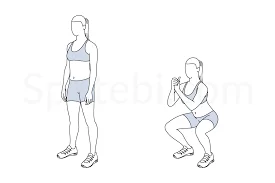
One of the best leg workouts for strengthening your quadriceps, hamstrings, glutes, and calves is the squat. They strengthen your lower body, increase hip and ankle flexibility, and improve your general stability and balance.
Regular squats can help improve your posture and core strength because the exercise requires your body to remain upright. This workout is essential for developing strong, toned legs at home, whether you perform simple bodyweight squats or add variants like jump squats or sumo squats.
Forward Lunges:
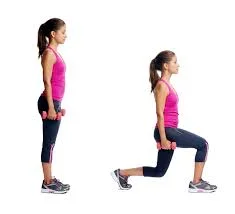
Forward lunges are a great way to strengthen your glutes, hamstrings, and quads while also enhancing your coordination and balance. You may improve hip flexibility and work several leg muscles by taking a step forward and lowering your body into a controlled lunge.
Additionally, this exercise promotes improved functional strength for daily tasks like walking or climbing stairs and helps balance the muscles in your legs. You may increase lower-body endurance and tone your thighs and glutes by performing forward lunges regularly.
Wall Sit:
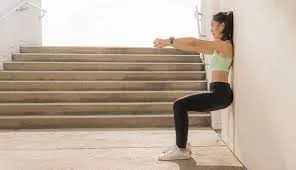
Wall sits are an effective isometric exercise that strengthens your glutes, hamstrings, and quadriceps while increasing muscle endurance. Your leg muscles are continuously used to support your body weight as you sit against the wall with your knees bent at a 90-degree angle.
This static hold increases mental attention, strengthens the lower body, and increases stamina. Without the need for any equipment, wall sits are particularly good for training the thighs and enhancing overall lower-body stability.
Glute Bridges:
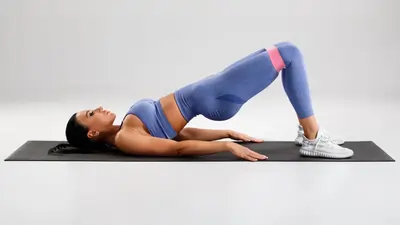
Your lower back, hamstrings, and glutes may all be strengthened and activated using glute bridges. The posterior chain muscles, which are crucial for stability and posture, are activated when you raise your hips off the ground while maintaining your shoulders and feet anchored.
This exercise increases hip mobility, eases lower back strain, and strengthens the core. By doing glute bridges regularly, you can improve your general balance and alignment, tone your buttocks, and gain strength for everyday activities.
Calf Raises:
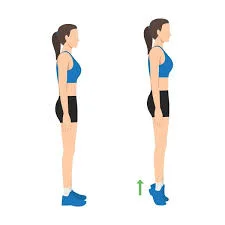
A straightforward yet incredibly powerful exercise for toning and strengthening your calf muscles is the calf raise. The gastrocnemius and soleus muscles, which are essential for walking, running, and jumping, are activated when you raise your heels off the ground and balance on your toes.
This exercise increases ankle stability, strengthens the lower legs, and improves general balance. Frequent calf raises can encourage improved performance in daily and sports activities while also helping to define and shape your calves.
Step-Ups:
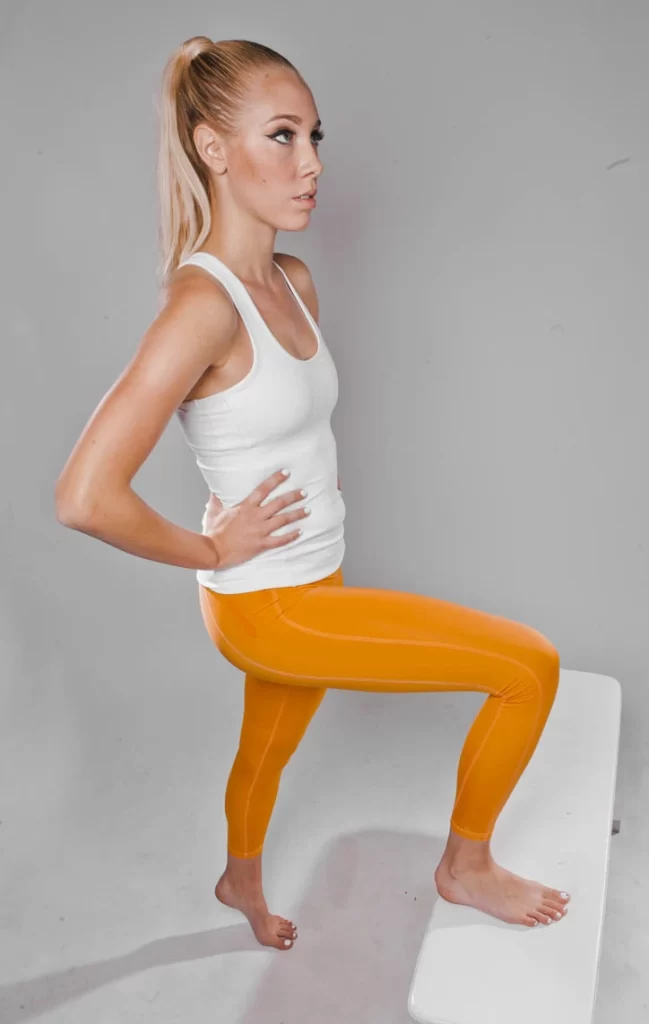
Step-ups are an excellent functional exercise that improves balance and coordination while strengthening your quadriceps, hamstrings, and glutes. You can simulate natural actions like climbing stairs by stepping onto an elevated platform like a solid chair or step, which makes it a great workout for everyday strength.
In addition to strengthening your core and stabilizing muscles, this exercise improves the strength and endurance of your lower body. Step-ups can help you tone your legs, raise your glutes, and enhance your general functional fitness.
Side-Lying Leg Raises:
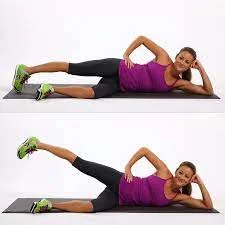
Strengthening the outer thighs, hips, and glutes can be achieved by side-lying leg lifts. The hip abductor muscles, which are essential for stabilizing your pelvis and enhancing balance, are activated when you raise your upper leg while resting on your side.
This exercise promotes improved lower body alignment, increases hip mobility, and tones and shapes the outer thighs. For people who want to strengthen their hips and avoid straining their knees or lower back, side-lying leg lifts are very helpful.
Walking Lunges:
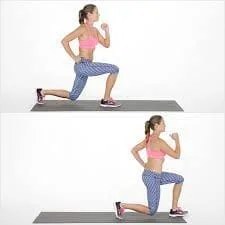
Walking lunges are a powerful lower-body workout that strengthens your quadriceps, hamstrings, glutes, and calves while enhancing your coordination and balance. In contrast to stationary lunges, this workout uses your core and stabilizing muscles as you take continual forward steps.
Walking lunges are perfect for developing functional fitness since they improve lower-body strength, flexibility, and endurance. Frequent exercise can help you tone your glutes and legs, increase your range of motion, and provide stronger, more fluid movement in everyday tasks.
Box Jumps:
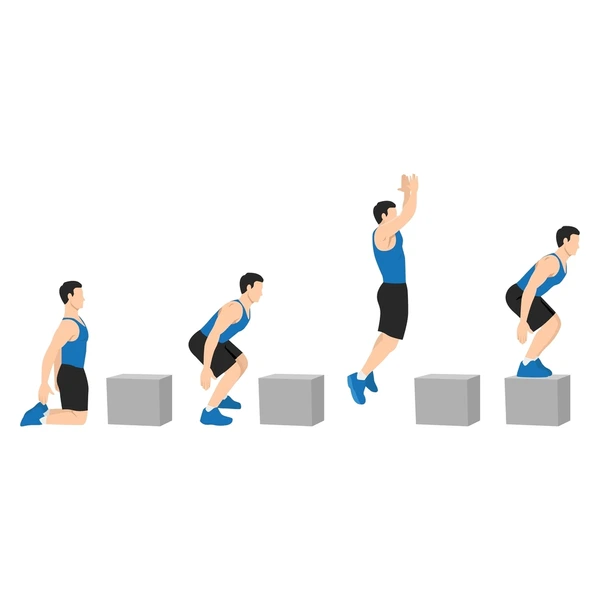
Box leaps are a powerful plyometric exercise that improves leg strength, power, and coordination. You can increase your cardiovascular endurance and work your quadriceps, hamstrings, glutes, and calves by jumping onto a solid platform or step.
By improving lower-body explosiveness, agility, and balance, this exercise improves athletic performance. Box jumps are an ideal addition to any at-home leg exercise regimen because they are excellent for increasing metabolism and burning calories.
Bulgarian Split Squats:
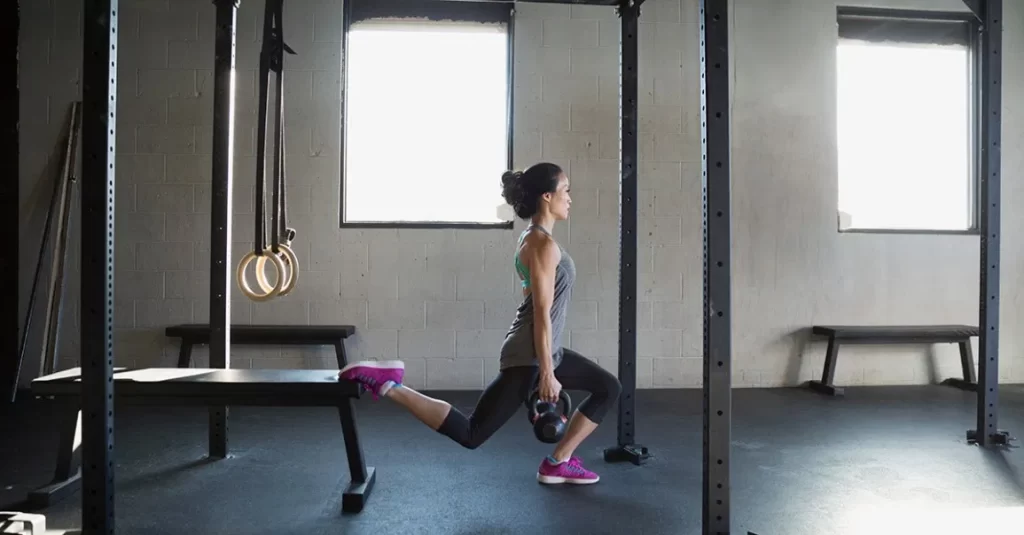
Bulgarian split squats are an effective one-leg exercise that strengthens the glutes, hamstrings, and quadriceps while enhancing stability and balance. You can increase the strength and endurance of your front leg muscles by raising your back foot on a chair or step and lowering your body into a controlled squat.
This exercise improves hip flexibility, corrects muscular imbalances, and fosters improved lower-body coordination. Bulgarian split squats are a great way to develop strength, tone your legs and glutes, and enhance your overall athletic ability.
Conclusion:
Without the need for any additional equipment, you may increase your strength, balance, and general mobility by incorporating these leg exercises into your at-home workout regimen. Each exercise helps you build strength and endurance by focusing on important lower-body muscles, such as your thighs, glutes, calves, and hips.
These top ten leg exercises provide a practical and efficient way to reach your objectives, whether they are to tone your legs, improve athletic performance, or just keep active. You’ll immediately notice stronger, more contoured legs and improved movement in your daily life if you maintain consistency and concentrate on appropriate technique.
FAQs
Your skin tone may alter during or after physical activity. It might turn purple, bluish, or even darker than normal. Low oxyhemoglobin levels are frequently the cause of the bluish coloring. extreme exhaustion.
Large muscle groups like your glutes, quadriceps, and hamstrings are worked during leg day, which results in significant muscle breakdown and necessitates extra energy for recovery. Inadequate nutrition or hydration, overtraining, or systemic exertion—leg workouts are more systemically taxing than those for smaller muscle groups—all contribute to this tiredness.
Machine leg presses, step-ups (start low), floor bridges, RDLs, and leg curls are excellent options to strengthen the legs without putting too much strain on the knees if you have knee pain.
Cardiovascular activity, which strengthens the heart and burns calories, should be a part of any fitness regimen. Additionally, most people can walk anywhere, at any time, and with just a decent pair of shoes.
As the muscles heal and rebuild themselves, the soreness is natural and actually makes them stronger. After the activity, the soreness usually peaks in the first two days and then gradually decreases over the following few days.
No, you shouldn’t train your legs every day because doing so might result in overtraining and injury. Muscles require 48 to 72 hours to grow and recuperate. Try to work out your legs two or three times a week for the best muscle growth, being sure to give yourself enough time in between. To increase blood flow, you can integrate low-intensity mobility work or workouts like marching daily, but avoid heavier compound lifts.
The greatest muscle groups in your body are used during leg days, which increases energy demand and the “afterburn” effect. As a result, leg days might burn more calories. Numerous muscles are used in exercises like deadlifts and squats, which increase calorie expenditure both during and for hours after the workout because of excess post-exercise oxygen consumption (EPOC).
It can be tempting to select one exercise—typically the one you detest the most—and omit the other because leg presses and squats target similar muscles. That could be a poor decision. The workouts complement one another for the best possible muscle strengthening and toning, even if they target the same areas.
Because they have been shown to maximize muscle growth, increase strength, and enhance functional fitness, the big five lifts—the deadlift, bench press, squat, shoulder press, and pull-up—are frequently regarded as the greatest compound exercises.
For instance, if you want to improve your functional strength, squats might be a better option. Leg presses may be the best option if you want to develop and strengthen your legs, particularly your quadriceps. In the end, you can gain strength from both exercises.
Yes, five exercises can be enough for a leg workout as long as they target your quadriceps, hamstrings, glutes, and calves using a combination of compound and isolation movements. Focus on completing each exercise with the right form and intensity because quality is more important than quantity.
To get the most out of your workouts without going overboard with volume, it’s better to concentrate on three to five different leg exercises. This method guarantees you’re not wasting time in the gym and aids in muscular growth. To prevent lengthy, ineffective workouts, focus on these fundamental principles.
References:
- Davis, N. (2025, June 16). 15 leg exercises and how to design a leg workout. Healthline. https://www.healthline.com/health/fitness/leg-workout
- Bruce, C., & Bruce, C. (2025b, August 14). Leg Workout: 15 Exercises (at Home & Gym w/ Animations). Tua Saúde. https://www.tuasaude.com/en/leg-workout/
- CPT, A. M. W., CPT, J. M., & CPT, C. S. (2023, January 4). 31 leg exercises at home that require no equipment. SELF. https://www.self.com/gallery/killer-legs-no-gear-required-slideshow
- Beck, C. (2025, October 23). The best leg exercises for your leg day workout. Gymshark. https://row.gymshark.com/blog/article/best-leg-exercises
- Nasm, B. W. (2023, June 14). The 16 best leg workouts you can do absolutely anywhere. Men’s Health. https://www.menshealth.com/fitness/a19530404/leg-workout-without-weights/
- Cscs, J. C. M., & Cscs, J. C. M. (2025, March 28). Leg workouts. ATHLEAN-X. https://learn.athleanx.com/articles/legs-for-men/leg-workouts